Continue Shopping
Customers Who Bought This Item Also Bought


Clean, safe and incredibly effective oral care.
Popular searches

If you have wondered whether your medication can cause dry mouth, the answer is often yes, and it matters more than most people realize.
I am Dr. Derek Gatta, a dentist, prosthodontist and co-founder of RiseWell. Here is something I have noticed over the years. A patient comes in with new decay, sometimes several spots at once, and they are genuinely confused. They have been brushing. They have been consistent. They have not changed anything.
And then I ask about medications. That is usually where the conversation shifts.
A lot of common prescriptions have a side effect that gets listed in tiny print but almost never gets explained. They reduce saliva flow. And that single change can quietly reshape everything about how your mouth functions.
The list is longer than most people realize. Antidepressants. Blood pressure medications. Antihistamines. Certain bladder and anxiety medications.
None of these are unusual, and many people take one or more of them for years. And in most cases, no one ever connects the prescription to what is happening in the mouth.
That is not anyone's fault. It is simply information that tends to fall through the gap between your prescribing physician and your dentist.
Saliva is not just about moisture. It is your mouth's primary defense system.
It buffers acid.
It rinses bacteria.
It keeps the oral environment balanced.
When production drops, even modestly, the whole ecosystem shifts.
This is why reduced saliva is such a quiet issue. It is not that anything dramatic happens overnight. It is that your mouth loses some of its natural ability to keep itself in balance, day after day.
Reduced saliva rarely announces itself. It might just feel like waking up with a stickier mouth, or needing more water during the day.
People adapt, and they chalk it up to stress or aging. Meanwhile, months and years are passing.
By the time someone is sitting in my chair with decay that is hard to explain, the medication connection has often been going on for a while. Not because they did anything wrong. Because nobody told them.
Your mouth will usually signal that something is off before an X-ray does. It is worth listening.
If you are managing medication-related dryness, a few simple habits make a real difference.
Sip water consistently throughout the day rather than all at once. Timing matters more than volume when saliva is not doing its usual work.
Rinse with water after eating to help clear the mouth when natural buffering is reduced.
Mention it at your next dental visit. Ask specifically whether your medications are known to affect saliva, since your dentist and prescribing physician do not always connect on this.
None of these add much to your day. They just help support a mouth that is working with less of its usual defense.
The other piece is your routine, and this is where a lot of people unknowingly work against themselves.
Most conventional toothpastes use foaming agents, sodium lauryl sulfate being the most common, to create that intense lathering sensation. In a mouth already dealing with reduced saliva, those ingredients can strip oral tissue and disrupt the balance your mouth relies on. Alcohol-based mouthwash does something similar. It pulls moisture from tissue that is already short on it.
And there is a habit cost too. When your mouth feels stripped after brushing, you rush it, you skip parts and the routine quietly falls apart.
Alcohol-free formulas without harsh foaming agents are the gentler choice. They support the mouth rather than stripping it. For a mouth managing medication-related dryness, they are simply the practical option.
If your mouth has started feeling drier and you take a regular medication, the two may be connected. It is worth a closer look and a conversation at your next dental visit.
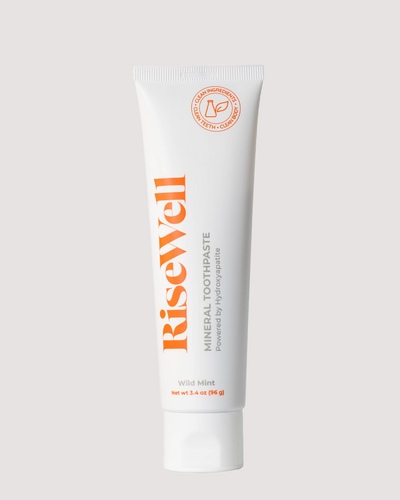
In the meantime, the small habits help. Sip water through the day. Rinse after eating. Brush with a naturally effective hydroxyapatite mineral toothpaste. And choose gentle, alcohol-free, SLS-free products that support a dry mouth instead of stripping it.
Your mouth is the best signal. Listening early is the whole advantage.
SHOP MY FAVORITE ORAL CARE RECOMMENDATIONS


Yes. Many common medications reduce saliva flow as a side effect, including antidepressants, blood pressure medications, antihistamines, and certain anxiety and bladder medications. The effect is often gradual and easy to miss.
Antidepressants, blood pressure medications, antihistamines, and some bladder and anxiety medications are commonly associated with reduced saliva. If you are unsure, ask your dentist or prescribing physician whether your specific medications are known to affect saliva.
Saliva is the mouth's primary defense. It buffers acid, rinses bacteria, and keeps the oral environment balanced. When saliva drops, the mouth loses some of that natural balance, which is why dryness is worth addressing early.
Sip water consistently throughout the day, rinse with water after eating, and choose gentle, alcohol-free, SLS-free products. It also helps to mention the dryness at your next dental visit.
For a dry mouth, alcohol-free formulas are generally the gentler choice because alcohol can pull moisture from tissue that is already short on it. Formulas without harsh foaming agents support the mouth rather than stripping it.